 Rongsheng Refractories Factory
12 Key properties of chemical resistance tiles
Acid-resistant bricks are a special type of ceramic tile with high resistance to acids and alkalis, maintaining good performance even in strong acid and alkali environments. chemical resistance tiles possess many excellent properties; this article will describe the specific properties of acid-resistant bricks.
12 key properties of chemical-resistant tiles
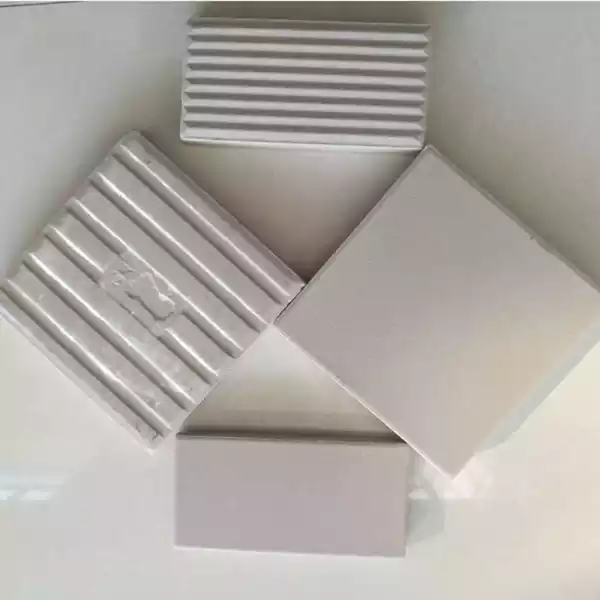
Low water absorption. The water absorption rate also determines the use of acid-resistant bricks. Acid-resistant bricks with high water absorption rates have low density and loose pores, making them unsuitable for use in areas with frequent activity, as they will absorb water and accumulate dirt that is difficult to clean. Acid-resistant bricks with low water absorption rates, on the other hand, have high density and excellent moisture resistance and stain resistance.
Mohs hardness is high. Hardness directly affects the service life of acid-resistant bricks and is therefore particularly important. This can be assessed by tapping the brick and listening to the sound; a crisp sound indicates good internal quality and that it is less prone to deformation and breakage.
Good wear resistance. Abrasion resistance is described by the volume of acid-resistant brick powder produced under a certain force, a certain abrasive, and a certain number of revolutions. The more acid-resistant brick powder produced, the worse the abrasion resistance. Acid-resistant bricks with good abrasion resistance can withstand heavy pressure, are not easily worn, and remain as good as new for a long time, making them particularly suitable for use in public places.
Strong resistance to heavy pressure. High-strength, chemical-resistant tiles have strong crack resistance. The minimum compressive strength of standard ceramic tiles is 35 MPa (1200 N), equivalent to a 120 kg person standing on an area the size of one foot. The higher the strength of the acid-resistant brick, the better its resistance to heavy pressure.
High gloss. The gloss level refers to the reflectivity of the surface of acid-resistant bricks; the higher the gloss, the stronger the reflectivity.
Good resistance to cold and freezing. Also known as resistance to rapid heating and cooling, this is an indicator of whether acid-resistant bricks can function normally in climatic environments with large temperature fluctuations. This indicator is particularly important in climatic environments with large diurnal temperature differences. This performance is mainly for acid-resistant exterior wall bricks.
Good stain resistance.When acid-resistant bricks are stained with dirt, the easier it is to wash off, the better their stain resistance. Stain resistance is tested by applying a standard, easily residue-producing contaminant to the brick surface, and after a certain period, cleaning with various cleaning agents such as bleach, laundry detergent, propionate, hydrochloric acid solution, and potassium hydroxide solution.
High resistance to chemical corrosion. Anti-corrosion and acid-resistant bricks possess excellent resistance to chemical substances (such as acids, alkalis, and salts). Even when exposed to acidic or alkaline environments for extended periods, they remain largely unchanged. This enhanced chemical resistance extends the lifespan of acid-resistant bricks under natural conditions. Furthermore, stronger resistance to staining and corrosion makes daily cleaning easier.
Low colour difference. Lay the chemical resistance tiles flat on the floor, arranged in a one-square-meter pattern, and observe from a distance of three meters to see if there are any colour differences, depth differences, or gaps in the joints.
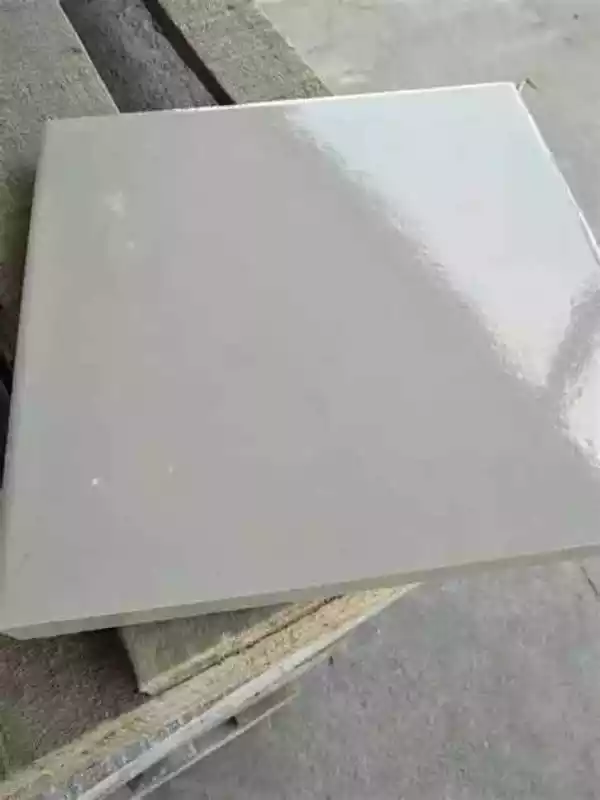
Good surface flatness. The levelness of the surface of chemical resistance tiles is measured by edge curvature, center curvature, and warping. Size can be judged visually; check if a batch of acid-resistant bricks is roughly the same size and can be easily pieced together. Small color differences and uniform size indicate high-quality bricks.
Low radioactivity. When certain special elements undergo proton splitting during electron transitions, they produce radiation harmful to the human body. The radioactivity of these elements in our antique-style, fully polished, glazed microcrystalline stone tiles is far lower than that of polished tiles containing zirconium silicate, as there are no specific requirements for surface whiteness.
Good anti-slip properties.In some public places, good anti-slip performance is one of the most important indicators.
WeChat
Scan the QR Code with wechat