 Fabrica de refractare Rongsheng
Materiile prime cu conținut ridicat de alumină sunt utilizate în produsele refractare
Materiile prime cu conținut ridicat de alumină sunt un tip foarte important de produs refractar. Materiile prime refractare cu conținut ridicat de alumină includ bauxita, corindon sinterizat, alumină topită, mulată, și minerale din grupul sillimanit.
Bauxite
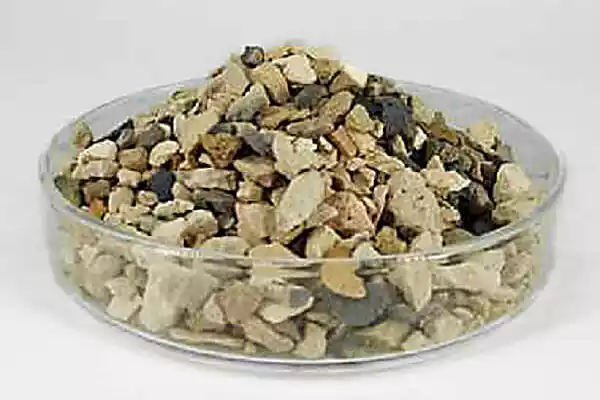
Bauxite is the main raw material for producing brown fused alumina, while high-alumina clinker with an Al₂O₃ content of 88%–90% is the main raw material for sub-white fused alumina. Alumina is used as a raw material for producing white fused alumina and dense fused alumina. Bauxite, also known as high-alumina bauxite or aluminum bauxite, mainly consists of gibbsite (Al₂O₃ • H₂O) and gibbsite (Al₂O₃• 3H₂O).
China has extremely rich reserves of high-alumina bauxite: deposits extend from Shanxi, Hebei, and Shandong north of the Yellow River, through Henan and Guangxi in central China, to Guizhou and Yunnan in the southwest. Currently, the main production areas of high-alumina bauxite clinker are in Shanxi, Henan, and Guizhou. Some smaller mines are also under development in Hunan. The main minerals in Chinese high-alumina bauxite are gibbsite, boehmite, kaolinite, and pyrophyllite. Based on their mineral composition, they can be divided into three types: gibbsite-kaolinite type (DK); boehmite-kaolinite type (BK); and gibbsite-pyrophyllite type (DP). Currently, DK-type high-alumina bauxite is the most widely used. DK-type high-alumina bauxite clinker is classified into S, I, IIA, IIB, and III according to its Al2O3 content.
Sintered corundum and fused corundum
Artificial corundum is produced by melting industrial alumina or high-alumina bauxite in an electric arc furnace as the main raw material. Alternatively, corundum-coated alumina can be produced by sintering. This method also uses industrial alumina powder as the main raw material, which is calcined, finely ground, pelletized, and fired. This method is technically challenging, but the product has high strength, rezistență puternică la coroziune, and good thermal shock stability. So-called “sub-white corundum” is actually dense fused alumina based on high-alumina bauxite, with an Al2O3 content greater than 98% and an apparent porosity of less than 4%; it is made by electrofusion of high-alumina bauxite under reducing atmosphere and controlled conditions. Corundum crystals are granular, generally 1-15 mm in size; the main impurities are rutile, aluminum titanate, and their solid solutions.
Mullit
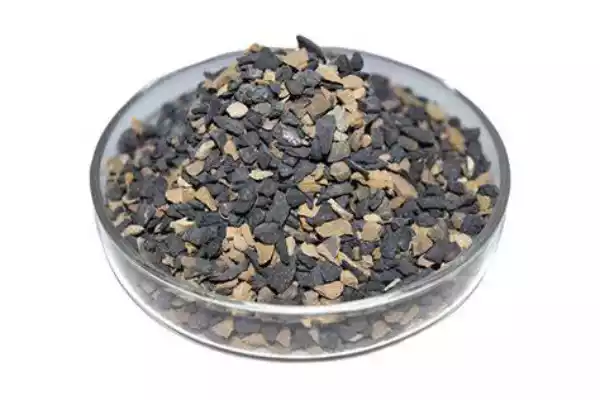
Mullite is a refractory material with 3Al₂O₃•2SiO₂ crystalline phase as its main component. Mullite is divided into two categories: natural mullite and synthetic mullite. Natural mullite is rare; it is generally synthesized artificially. Mullite is chemically stable and insoluble in hydrofluoric acid. It possesses excellent high-temperature mechanical and thermal properties. Prin urmare, synthetic mullite and its products have advantages such as high density and purity, high high-temperature structural strength, low-temperature creep rate, low thermal expansion coefficient, strong resistance to chemical corrosion, and thermal shock resistance.
Sillimanite group minerals
The sillimanite group of minerals includes kyanite, andalusite, and sillimanite, commonly known as the “three stones.” These three stones share the same chemical composition but differ in crystal structure, belonging to the category of polymorphs. When heated to high temperatures, they all transform into mullite, producing a small amount of molten SiO2, accompanied by volume expansion.
Due to the different degrees of expansion upon heating, their direct utilization also differs. Andalusite, with its minimal volume change, is used directly as raw material, whether in brick making or as an additive. Sillimanite and kyanite, on the other hand, are often added to the batch as expanding agents, particularly in monolithic refractories. For brick making, clinker must be calcined, especially for kyanite, which must be calcined into clinker.

WeChat
Scanați codul QR cu wechat