 Fábrica de refractarios de Rongsheng
Los ladrillos de circonio y magnesia se utilizan en hornos de vidrio.
En la industria de la fundición de vidrio, Los hornos están constantemente expuestos a altas temperaturas., entornos de escoria y gas de horno altamente corrosivos, imponen exigencias extremadamente altas a los materiales refractarios. Ladrillos de magnesia y circonio, debido a su excelente resistencia a la corrosión y rendimiento a altas temperaturas, especialmente su resistencia a los álcalis altamente eficiente, se han convertido en uno de los materiales refractarios clave para componentes críticos de hornos de vidrio.
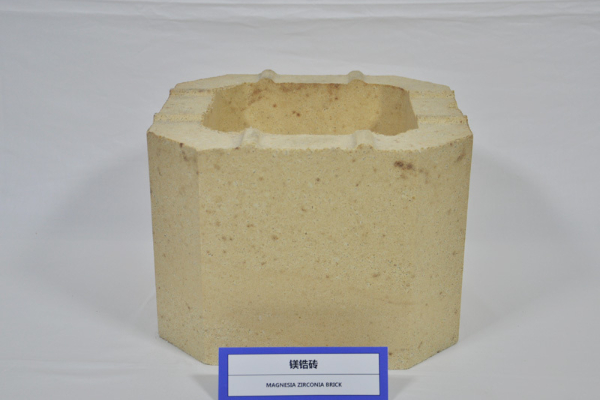
¿Por qué los ladrillos de magnesia y circonio tienen una excelente resistencia a los álcalis??
Los ladrillos de magnesia-circonio se componen de magnesia fundida y arena de circón. Esta combinación es clave para su excelente resistencia a los álcalis.. La magnesia fundida posee alta refractariedad y buena estabilidad química., mientras que la arena de circón forma una estructura densa que resiste eficazmente la penetración de gases alcalinos y escorias.. Incluso cuando se expone al duro ambiente alcalino de los hornos de vidrio, Esta composición única permite que los ladrillos de magnesia y circonio mantengan su integridad y rendimiento..
Ventajas de los ladrillos de magnesio y circonio.
Una de las principales ventajas de ladrillos de magnesia-circonio es su alta densidad, con una densidad aparente mayor que 3.08 g/cm³. Esta alta densidad aporta varias propiedades importantes.:
Resistencia a la erosión: La densa estructura resiste eficazmente la erosión de la escoria alcalina., reduciendo el desgaste del ladrillo y extendiendo su vida útil. Por ejemplo, en hornos de vidrio con alto contenido de álcali, Los ladrillos tradicionales son erosionados por la escoria. 5-10 mm por año, mientras que los ladrillos de magnesia y circonio pueden reducir esta tasa de erosión a menos de 2 mm por año.
Resistencia al rociado: Tienen mejor resistencia al choque térmico., Evitar que los ladrillos burbujeen bajo cambios rápidos de temperatura.. en hornos de vidrio, donde las temperaturas fluctúan frecuentemente durante la fusión y el enfriamiento, Los ladrillos de magnesia y circonio mantienen su integridad estructural mejor que los ladrillos tradicionales..
Resistencia a altas temperaturas: Los ladrillos de magnesia y circonio pueden soportar temperaturas de hasta 1700 ℃, garantizar el funcionamiento estable de los hornos de vidrio de alta temperatura.
Los ladrillos de circonio y magnesia se utilizan en hornos de vidrio.
Los ladrillos de magnesio y circonio proporcionan una estabilidad, durable, Solución de material refractario energéticamente eficiente para industrias alcalinas., especialmente hornos de vidrio. Su composición única, alta densidad, y un rendimiento superior ayudan a las empresas a reducir costes, mejorar la eficiencia, y mejorar la protección del medio ambiente.
Selección de ladrillos refractarios para hornos de vidrio.
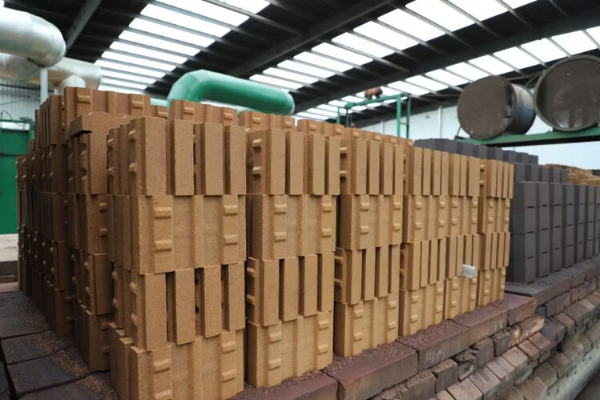
Los materiales refractarios tradicionales utilizados en los hornos de vidrio a menudo enfrentan numerosos desafíos, como una pobre resistencia a los álcalis, reemplazos frecuentes, y altos costos de mantenimiento; mala resistencia al choque térmico, lo que puede provocar fácilmente el desconchado del material y afectar el funcionamiento normal del horno.. Los ladrillos de magnesia y circonio pueden resolver eficazmente estos problemas. Su excelente resistencia a los álcalis reduce la frecuencia de reemplazo., y su resistencia al choque térmico garantiza un funcionamiento estable del horno en condiciones de temperatura complejas..
WeChat
Escanea el código QR con wechat